
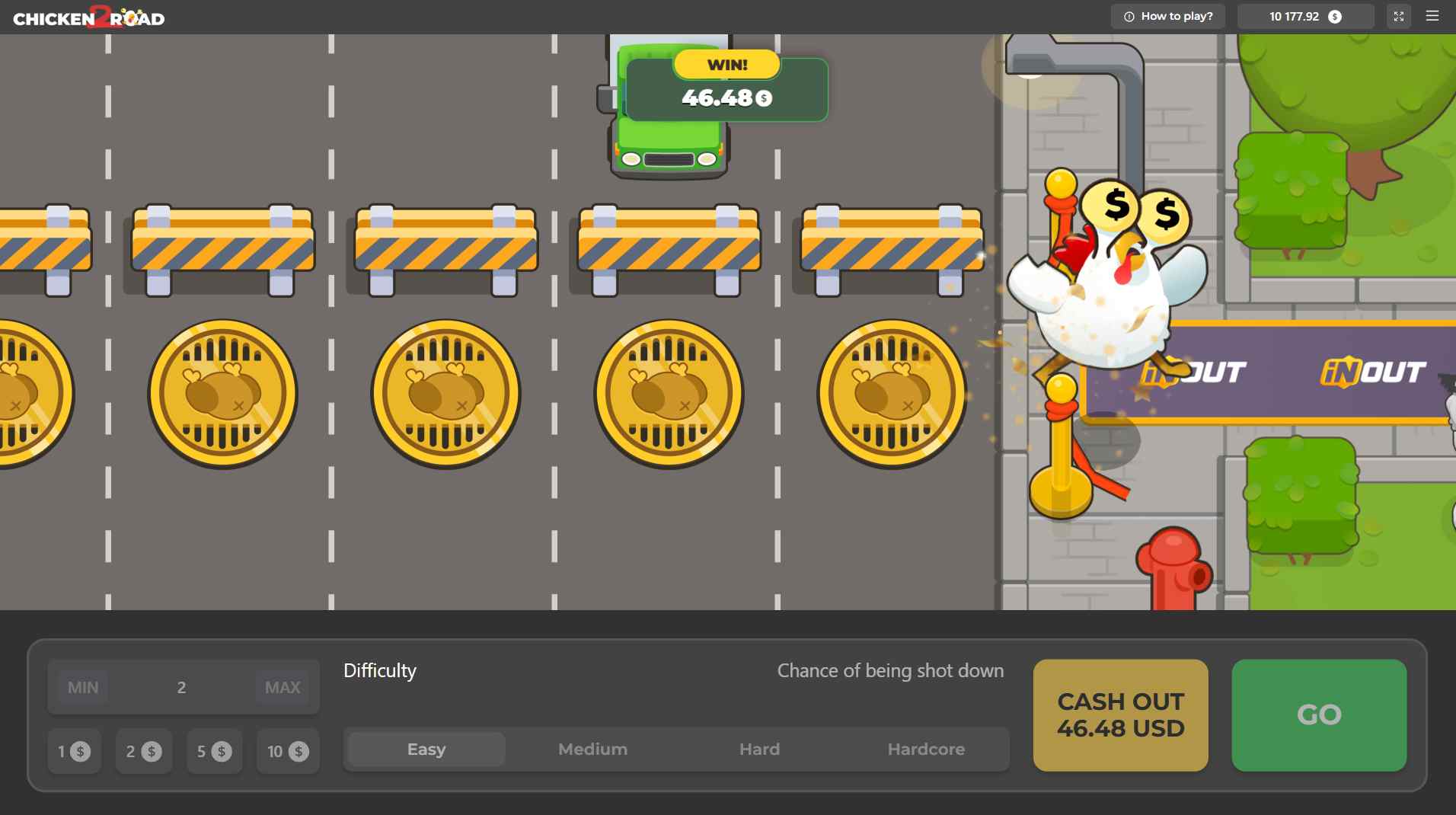
For UK slot players, Chicken Road offers a fun farmyard setting, but the workings underneath the cartoon surface matter more than the feather details and eggs. We have compiled this article to break down how the slot is built, how frequently you might realistically land a paying spin, and which mechanics can turn a modest win into a significantly bigger return. We concentrate on the slot itself rather than any casino, covering theme, reel structure, win lines, RTP, volatility, bonus symbols, stake limits and responsible play. By the end you should be capable of reading the standard paytable with certainty and be aware of what to check before you spin.
What Chicken Road Slot Is and the Way the Theme Operates
Chicken Road is an online slot themed around a cartoon chicken’s journey across a road, with the aesthetic of a light farmyard or countryside setting. The theme often defines the high-value symbols, which may include chickens, eggs, road signs, vehicles or similar farm props, while lower-value symbols are frequently styled playing-card ranks. The background, animations and sound effects enhance the story, but they do not alter the random number generator or the return to player. For real play, the theme is most useful because it helps you spot premium symbols quickly when they appear across the reels.
If you are looking at Chicken Road 2 rather than the first release, the core theme should feel familiar, but the reel layout, symbol values and bonus triggers may have been adjusted. We treat each version as its own game and consult the in-game help screen rather than expecting the original paytable applies. Visually, the road-crossing idea can make bonus events easier to follow, especially when a scatter symbol moves or a wild expands. In our experience, this type of theme tends to blend a casual, accessible look with remarkably detailed mechanics once the paytable is opened.
Special Features: Wild Cards, Scatter Symbols, Complimentary Spins and Multiplier Symbols
Chicken Road’s bonus features are where the rewards can fluctuate rapidly, so we always check the symbols before depending on chance. A wild symbol typically replaces for standard payout symbols to create a winning sequence, and in certain slots it might have its own reward or a multiplier effect. A scatter symbol often pays regardless of paylines and is commonly the trigger for complimentary spins or a bonus pick feature. Multiplier symbols can be used on a single line win, all wins in free spins, or a feature result, but the exact rule is set by the slot design.
To grasp Chicken Road specifically, view the paytable and look for a section named bonus or bonus. You should find out the number of scatters required, whether free spins can retrigger, and if multipliers rise within the feature. In our experience, machines with a crossing-road theme commonly feature a scatter or progression feature as the main bonus, while wild cards sustain the base game’s action. The key point is not the visuals but the maths: confirm if bonus winnings are combined with line payouts, and if the bonus round employs the same reels as the main game or a unique set.
- Wild cards: check replacement rules, payout value and whether they appear in the main game exclusively.
- Scatters: observe the count trigger the bonus and if they need to land on certain reels.
- Free games: verify the number of spins, retrigger potential and any special symbols.
- Multipliers: see if they are applied to line payouts, overall wins or exclusively in the feature.
Wager Range, Top Win and Prize Pool Type
The stake range in Chicken Road needs to be confirmed in the game client because operators may set distinct lower and upper limits for the identical slot. Many UK online slots in this category start between £0.10 and £0.20 per spin, with upper limits commonly attaining £50, £100 or more. The number of paylines or ways can influence how your total stake is split. If a game has 25 fixed paylines and you stake £1, you are essentially wagering £0.04 per line. Make sure to confirm whether the shown figure is the total spin cost or a per-line value.
Top payout and jackpot category are similarly crucial. A fixed jackpot or max win multiplier is outlined in the game rules and does not rise with player activity, while a progressive jackpot takes a small portion of stakes and contributes it to a shared prize pool. Chicken Road is more likely to use a fixed max win expressed as a multiple of your stake, such as several thousand times the bet, but you ought not depend on general ranges. The official paytable will specify whether the top prize is a fixed amount, a multiplier or a progressive pot.
Columns, Positions, Paylines and Ways
Chicken Road’s specific grid can differ by version, so the single trustworthy place to discover the reel and row count is the game’s help screen. Many modern online slots in this category employ a five-reel, three-row layout, but fixed paylines can vary from as few as 10 to 25 or more, while some builds employ 243 ways to win or another adjacent-reel system. The difference matters more than it first appears. Fixed paylines demand matching symbols to land on a specific line, while ways-to-win systems award when matching symbols land anywhere on adjacent reels from the leftmost reel.
A ways-to-win engine often increases the number of spin events that yield something, but the mean line win may be smaller because the stake is allocated differently. A fixed-payline game can appear cleaner when you are learning because you can track individual lines. We suggest checking whether Chicken Road pays both ways or only left to right, and whether scatter symbols payout in addition to line wins. These small details change your session experience, so before comparing hit frequency with another slot, make sure you are comparing the same structure.
Payout Frequency and Win Rate Clarified
Hit frequency is the share of spins that generate at least one payout, counting wins valued at less than your stake. A slot with a 25% hit frequency ought to, on average, pay something once every four spins. Many online slots range between 20% and 35%, while higher-hit games may attain 40% or more. Chicken Road may or may not disclose an exact hit frequency; if it is not listed, you can check it in demo play over several hundred spins. The key point is that a high hit frequency typically means smaller average prizes, not guaranteed profit.
Player return rate is the real-world return you experience in a session, presented as a percentage of the amount you wagered. For example, if you bet £100 in total and finish with £82, your session win rate is 82%. This can land far above or below the game’s RTP because short-term results are dominated by variance. We use hit frequency to set expectations about how frequent the reels will appear, but we never use it as a prediction of the next spin. Every result is unrelated, and no pattern of misses renders a win more likely.
How to Experience Chicken Road Slot Step by Step
The core procedure is simple, but we have found that most mistakes stem from skipping the paytable rather than from misunderstanding the spin button. Start by finding the stake selector, which is usually marked with a coin icon or plus and minus controls. Then find the paytable or information button, often a small ‘i’ or three lines. Choose your total stake before any spin, and keep in mind that on some slots this stake is split across paylines or ways. Once the stake is set, a single spin spins the reels and assesses any matching combinations according to the game’s rules.
- View the game’s paytable and examine reels, rows, paylines or ways, and symbol values.
- Choose a total stake that suits your session budget, not just the minimum available.
- Opt for manual spin first so you can see how wins are counted and features trigger.
- If you use autoplay, set loss or win limits and hold the session length under control.
- Look for wild and scatter symbols, because they work differently from regular line pays.
We always recommend trying the demo or free-play version before using real money. In free play, the same random engine drives the results, but you can grasp the pace of wins without risking anything. This is especially helpful for a slot like Chicken Road, where a run of empty spins can be followed by a feature trigger. A short practice session allows you to learn whether small wins come regularly or whether the game relies on longer bonus rounds. In the UK, most reputable operators provide demo mode once you have verified your age or logged in; the game rules stay identical either way.
Payout percentage and Risk level: What You Should Know
RTP, or player return, is a theoretical percentage that shows how much of all bet money a slot is programmed to pay back over a massive number of spins. Many UK-facing slots sit between 94% and 96.5%, but Chicken Road’s own RTP should be found in the game rules or help screen. A higher RTP does not ensure a more profitable short session, and a smaller RTP does not mean you cannot win. It is a long-term statistical measure, not a promise for any single deposit or gaming session.

Volatility defines how the game distributes those payouts. A low-volatility slot is inclined to generate regular but more modest wins, which can appear closer to the stated hit frequency. A high-variance slot may offer less paying spins and then unlock a bigger bonus or uncommon five-of-a-kind win. Chicken Road’s volatility is usually shown as a rating, such as minimal, average or high, rather than an precise number. We consider volatility alongside hit frequency because two games can have the identical RTP but perform entirely in a different way over 100 or 200 spins.
Studying the Paytable and Game Rules
The fastest way to grasp Chicken Road is to examine the paytable prior to your first real-money spin. We bring up the information screen and review four areas: symbol values, payline or ways rules, bonus feature conditions, and technical settings such as RTP or volatility. Symbol values are commonly shown for three, four and five of a kind, while the top symbol may also show a prize for two. The lines or ways diagram shows how combinations must align, and the feature page explains what scatters or wilds actually do.
We apply a checklist because it turns the paytable into a set of expectations. For example, if the paytable reveals that a wild appears only on reels two, three and four, you know not to expect for a wild on reel one. If the free-spins trigger needs three scatters, two scatters are just a near miss and should not change your decisions. Checking the max win reveals you whether a five-of-a-kind top symbol or a feature multiplier is the real prize. These details are easy to miss in the moment but produce a big difference when you are trying https://www.bbc.co.uk/programmes/b05nk9sy to determine win rate after a session.

- RTP and volatility rating shown in the help menu.
- Number of reels, rows, paylines or ways to win.
- Maximum regular symbol payout and whether two of a kind pays.
- Wild and scatter function, including whether scatters appear only on certain reels.
- Free spins number, retrigger rule and any multiplier changes.
- Bet limits and the maximum win or jackpot type.
Hands-on Strategy and Safe Play
There is no betting system that changes Chicken Road’s random outcome, but you can choose a stake and session style that matches its volatility. If the game is high volatility, we opt for smaller stakes relative to our bankroll so that a run of empty spins does not drain the balance before a bonus. If the hit frequency feels high but wins are small, it can assist to set a win target and a loss limit. The main practical strategy is preparation: know the paytable, use the demo mode, and start with the lowest comfortable stake until you grasp the feature triggers.
Safe play is not a side note; it is part of any useful win-rate discussion. Because short-term results can be far from the RTP, we only play with money we can afford to lose, and we set time and deposit limits where the operator provides them. UK players can also use reality checks and self-exclusion tools if a game becomes hard to manage. Hit frequency may tell you how often a win might appear, but it cannot tell you how large those wins will be or when they will arrive.